Introduction
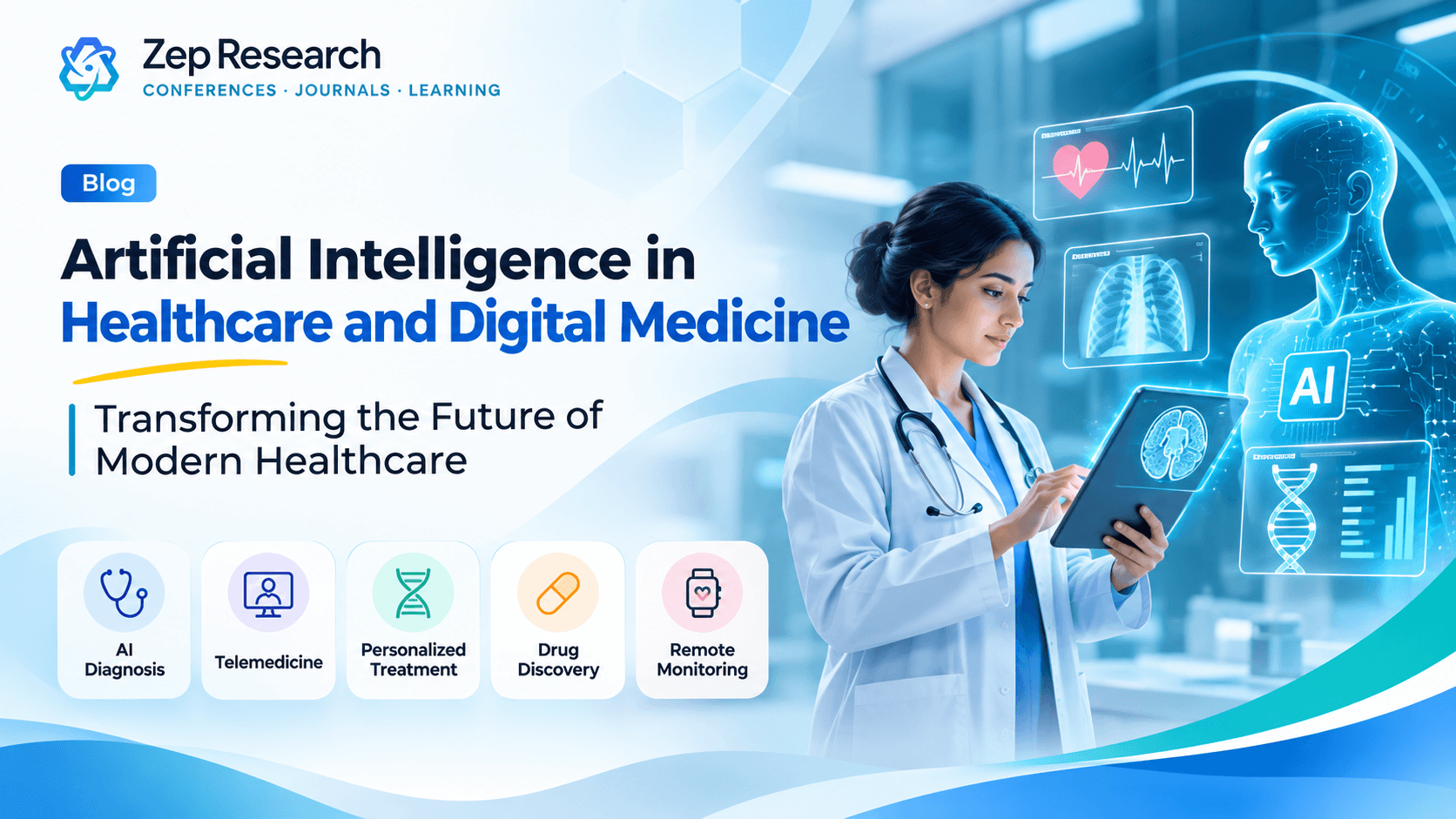
The healthcare industry is undergoing a major transformation through the integration of Artificial Intelligence (AI) and digital technologies. From improving disease detection to supporting personalized treatment and remote patient monitoring, AI is creating new opportunities for healthcare professionals, medical researchers and healthcare institutions.
Traditional healthcare systems often depend on manual processes, conventional diagnostic methods and physical consultations. Although these approaches remain essential, technological developments are introducing new ways to improve healthcare delivery, medical research and patient management.
Artificial Intelligence, machine learning, predictive analytics, telemedicine and wearable health technologies are becoming increasingly important in modern medical innovation. These technologies can help healthcare professionals analyse complex medical information, identify patterns and support clinical decision-making.
Digital medicine is also expanding access to healthcare services by connecting patients with medical professionals through digital platforms. As these innovations continue to develop, researchers are exploring how technology can contribute to more accessible, efficient and patient-centered healthcare systems.
1. Understanding Artificial Intelligence in Healthcare
Artificial Intelligence refers to computer systems designed to perform tasks that typically require human intelligence, including learning, analyzing information, recognizing patterns and generating predictions.
In healthcare, AI technologies can process large amounts of medical information and support professionals in identifying patterns that may be difficult to detect through traditional methods alone.
Machine learning, deep learning, natural language processing and computer vision are some of the technologies being explored across different medical applications.
Major applications of AI in healthcare include:
-
Medical image analysis and diagnostic assistance.
-
Patient risk assessment and predictive analytics.
-
Clinical decision-support systems.
-
Medical research and drug discovery.
-
Hospital administration and resource management.
-
Patient monitoring and healthcare data analysis.
For example, AI-powered imaging systems can assist in analyzing X-rays, MRI scans and CT scans. These systems may help identify unusual patterns that require further examination by qualified medical professionals.
AI is not intended to replace doctors or healthcare specialists. Instead, it can serve as a supportive technology that helps professionals make informed decisions.
2. AI-Powered Disease Detection and Early Diagnosis
Early disease detection is one of the most important areas of modern medical research. Identifying potential health conditions at an earlier stage can help healthcare professionals evaluate treatment options and improve patient management.
Artificial Intelligence is being explored as a supporting tool in medical diagnosis through advanced image processing, pattern recognition and predictive analysis.
Some important applications include:
Cancer Detection: AI-based image analysis can support the examination of medical scans and help identify suspicious patterns associated with certain types of cancer.
Cardiovascular Disease: Machine learning models can analyse selected clinical information to support cardiovascular risk assessment.
Diabetic Retinopathy: AI-assisted retinal image analysis can help identify signs of diabetic eye disease.
Neurological Disorders: Researchers are investigating AI applications for analysing brain images and identifying patterns associated with neurological conditions.
Infectious Disease Research: Predictive models can help researchers examine disease trends and analyse public health information.
Although these applications offer promising opportunities, their performance must be evaluated through clinical validation, diverse datasets and appropriate medical supervision.
3. Digital Medicine and Remote Patient Monitoring
Digital medicine combines medical knowledge with digital technologies to improve healthcare delivery, patient engagement and medical monitoring.
It allows healthcare services to extend beyond traditional hospital environments through connected devices, mobile applications and digital communication platforms.
Some important components of digital medicine include:
Telemedicine
Telemedicine enables patients to consult healthcare professionals remotely through video calls, digital platforms and online communication systems. It can improve access to medical consultations, particularly for people living in remote locations.
Wearable Health Technology
Smartwatches, fitness trackers and connected medical devices can collect health-related information such as heart rate, physical activity and selected physiological measurements.
Remote Patient Monitoring
Remote monitoring systems allow healthcare professionals to review selected patient information outside traditional clinical environments. These technologies may be particularly useful for monitoring certain chronic conditions.
Mobile Health Applications
Mobile healthcare applications can support appointment scheduling, medication reminders, health education and communication between patients and healthcare providers.
Together, these technologies are contributing to the development of more connected healthcare systems.
However, digital medicine also requires reliable internet connectivity, appropriate device access, data security and effective integration with existing healthcare services.
4. Personalized Healthcare Through Artificial Intelligence
Personalized medicine focuses on understanding individual patient characteristics when making healthcare decisions.
Traditional treatment approaches often follow established medical guidelines. However, patients may respond differently to the same treatment due to variations in medical history, genetics, lifestyle and other factors.
AI can help researchers analyze different types of patient information to identify patterns that may support personalized healthcare approaches.
Important research applications include:
-
Precision medicine and individualized treatment.
-
Predictive patient risk assessment.
-
Analysis of treatment response.
-
Personalized healthcare recommendations.
-
Genetic and biological data analysis.
For example, researchers can investigate how machine learning models analyze clinical and biological information to identify potential differences in treatment responses.
These applications may contribute to more individualized healthcare strategies. Nevertheless, AI-generated recommendations require scientific validation and should be interpreted by qualified healthcare professionals.
5. Artificial Intelligence in Medical Research and Drug Discovery
Medical research is becoming increasingly data-driven. Researchers frequently work with large datasets, scientific publications, biological information and clinical research findings.
Artificial Intelligence can support the analysis of complex information and help identify possible research directions.
In pharmaceutical research, AI technologies are being explored for:
-
Identifying potential drug candidates.
-
Analyzing molecular structures.
-
Predicting possible biological interactions.
-
Supporting clinical trial planning.
-
Studying disease mechanisms.
-
Analyzing scientific literature.
AI can help researchers investigate relationships within large datasets and accelerate certain stages of research.
However, computational predictions do not automatically establish the safety or effectiveness of a medicine. Laboratory testing, clinical trials, regulatory evaluation and scientific verification remain essential.
The combination of AI-based research tools and traditional scientific investigation may create important opportunities for future medical discoveries.
6. The Role of Generative AI in Modern Healthcare
Generative Artificial Intelligence is an emerging area that can produce text, summaries and other forms of digital content based on user instructions and available information.
In healthcare, generative AI is being explored for several supporting applications.
These include:
Medical Documentation: AI tools may help healthcare professionals prepare and organize clinical documentation.
Medical Literature Analysis: Researchers can use AI-assisted tools to summarize scientific literature and identify relevant research themes.
Patient Communication: Generative AI may support the preparation of understandable healthcare information and educational materials.
Research Assistance: AI systems can assist with brainstorming research questions, organizing information and exploring scientific concepts.
Healthcare Administration: Generative AI may help streamline selected administrative and communication activities.
Despite these opportunities, generated information may contain errors or misleading statements. Medical professionals and researchers must verify important information before using it in clinical or academic settings.
Patient confidentiality, data protection and responsible AI usage should remain essential considerations.
7. Challenges and Ethical Considerations of AI in Healthcare
Although Artificial Intelligence offers significant opportunities, its implementation in healthcare introduces technical, ethical and regulatory challenges.
Patient Data Privacy and Security
Healthcare information contains sensitive personal data. AI systems must follow appropriate privacy, consent and data protection requirements to prevent unauthorized access or misuse.
Algorithmic Bias
AI models trained on limited or unrepresentative datasets may produce different levels of accuracy across patient populations. This can create potential inequalities in healthcare delivery.
Accuracy and Reliability
AI systems can generate incorrect predictions or recommendations. Continuous testing, clinical validation and performance monitoring are necessary.
Transparency and Explainability
Healthcare professionals should understand the limitations of AI-assisted systems and receive appropriate information about how their outputs are generated.
Human Oversight
AI should support medical professionals rather than replace clinical responsibility. Important healthcare decisions require appropriate professional judgment.
Regulatory Compliance
Healthcare AI applications must consider relevant regulatory frameworks, medical device requirements and ethical guidelines in the countries where they are used.
Addressing these challenges is essential for building trustworthy and responsible digital healthcare systems.
8. The Future of Digital Healthcare
The future of healthcare will likely involve greater integration of intelligent technologies, connected medical devices and data-driven healthcare services.
Several developments are attracting attention from researchers and technology professionals.
AI-Integrated Hospitals: Healthcare institutions may increasingly use AI-assisted systems for selected diagnostic, administrative and operational activities.
Smart Wearable Devices: Connected health devices may provide more continuous health information and support remote monitoring.
Advanced Medical Imaging: Improvements in AI-based image analysis may support medical professionals in examining complex diagnostic information.
Precision Medicine: The combination of AI, genetics and medical data may create new opportunities for personalized treatment research.
Digital Healthcare Platforms: Connected healthcare platforms may improve communication between patients, healthcare professionals and medical institutions.
Robotic-Assisted Healthcare: Advances in robotics and intelligent systems may support selected surgical and clinical procedures under professional supervision.
The success of these developments will depend on scientific evidence, affordability, accessibility, patient trust and responsible implementation.
9. Emerging Research Opportunities in Artificial Intelligence and Digital Medicine
Artificial Intelligence in Healthcare and Digital Medicine is an interdisciplinary research area involving medical science, engineering, computer science, biotechnology, management and public health.
Researchers can explore several important topics:
-
Generative AI applications in clinical documentation and medical research.
-
Machine learning approaches for early disease detection.
-
Artificial Intelligence in cancer diagnosis and medical imaging.
-
Digital healthcare accessibility in developing countries.
-
AI-based remote patient monitoring systems.
-
Data privacy and cybersecurity in digital healthcare.
-
AI applications in personalized and precision medicine.
-
Machine learning in pharmaceutical research and drug discovery.
-
Ethical challenges of AI-assisted clinical decision-making.
-
The impact of wearable health technologies on patient monitoring.
-
Predictive analytics for hospital resource management.
-
AI applications in mental health research and digital support.
-
The role of telemedicine in improving rural healthcare services.
-
Evaluating the reliability of AI models across different patient populations.
-
Responsible adoption of Generative AI in medical education.
These topics offer opportunities for original research, interdisciplinary collaboration, conference presentations and academic discussion.
10. Why International Academic Collaboration Matters
Healthcare innovation requires collaboration between researchers, medical professionals, technology developers and academic institutions.
International academic conferences provide an opportunity for researchers to present their findings, exchange knowledge and discuss emerging developments with experts from different disciplines and countries.
Researchers working in Artificial Intelligence and Digital Medicine can benefit from academic discussions covering:
-
New developments in healthcare technology.
-
Medical research methodologies.
-
AI applications and clinical validation.
-
Digital transformation in healthcare.
-
Research ethics and responsible innovation.
-
Future opportunities for interdisciplinary collaboration.
Presenting research at academic conferences can also help researchers receive feedback, develop professional connections and identify opportunities for further investigation.
Academic collaboration plays an important role in translating research ideas into practical knowledge and future innovation.
Conclusion
Artificial Intelligence and Digital Medicine are creating new opportunities for the future of healthcare. From AI-assisted disease detection and personalized treatment to remote patient monitoring, medical research and drug discovery, these technologies are influencing how healthcare services are developed and delivered.
However, technological advancement must be supported by clinical evidence, responsible data management, ethical practices and professional oversight.
As healthcare systems continue to adopt digital technologies, researchers and academic institutions will play an important role in evaluating their effectiveness, identifying challenges and developing innovative solutions.
The future of modern healthcare will depend not only on technological progress but also on how effectively these innovations improve accessibility, patient care and human well-being.
About ZEP Research
ZEP Research supports academic knowledge exchange and international research collaboration through conferences and research-related initiatives. Researchers, academicians and scholars are encouraged to explore emerging research areas, share scientific findings and contribute to discussions shaping the future of innovation and technology.